
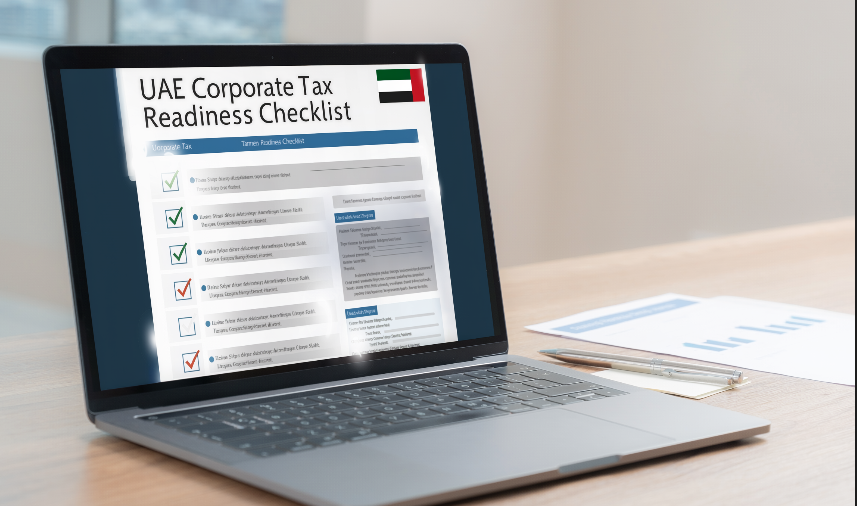
The introduction of UAE Corporate Tax requires businesses to reassess their financial, operational, and compliance frameworks to align with Federal Tax Authority (FTA) requirements. Early preparation helps avoid penalties, filing delays, and unnecessary audit exposure.
Businesses should first confirm Corporate Tax applicability, including tax residency, applicable tax rate, and Free Zone eligibility. Timely registration on the EmaraTax portal and consistency between tax records, trade licences, and legal documents are critical first-year requirements.
A review of business structure, ownership, related parties, and group relationships is essential to ensure accurate disclosures and Transfer Pricing compliance. At the same time, businesses must maintain reliable accounting records, consistent accounting policies, and properly classified revenue and expenses.
Corporate Tax readiness also involves identifying tax adjustments such as non-deductible expenses, exempt income, and applicable reliefs. Systems and ERP platforms should be capable of capturing tax-relevant data and supporting accurate reporting and reconciliations.
Finally, businesses should prepare taxable income computations in advance and strengthen internal controls, documentation, and governance processes. A structured readiness review enables smooth compliance, reduces penalty risk, and ensures audit preparedness under the UAE Corporate Tax regime.
Conclusion
Corporate Tax readiness is an ongoing process, not a one-time exercise. Businesses that conduct a structured readiness review are better positioned to ensure smooth compliance, reduce penalty exposure, and remain prepared for potential FTA audits.

Leave A Comment